
Skin conditions in cats can be an extremely uncomfortable experience, impacting a cat’s quality of life due to the extreme itchiness they cause. Often, a skin issue is a secondary condition to a more serious underlying medical condition, so a visit to your veterinarian is critical for a thorough examination and diagnostics to understand precisely what is causing the skin issue. If your cat has been scratching to the point of hair loss and you suspect a skin condition, your first instinct was likely to go online to search for information. At Dermatology Clinic for Animals, we work extremely hard to bring you the accurate information you need, so we’re glad you found us. We've taken the most frequently asked questions about cat dermatology and answered them as thoroughly and accurately as possible so you have the information you can trust to get your cat the relief they deserve.
If you’re looking for a highly trained veterinarian in Lacey, WA, we’d love to see your cat for a skin exam, so please call us at (360) 350-4756 .
What is cat dermatology?
Cat dermatology is the study of skin diseases in felines. There are a variety of skin conditions and diseases that can affect a cat, from flea allergies to skin cancers.
How do skin conditions impact the health and well-being of my cat?
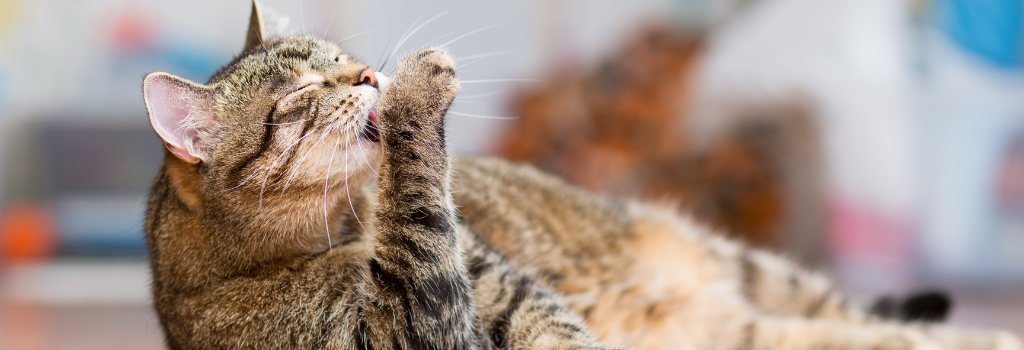
Cats' skin conditions can cause severe discomfort, with constant scratching and tearing the hair out of their skin. Even a low-grade itch from a skin condition, where a cat is only occasionally scratching their ears and shaking their head, can be uncomfortable. The discomfort significantly impacts their quality of life, especially if secondary skin infections develop due to itching. In some cases, skin infections can even make your cat lethargic.
What are some signs and symptoms of skin issues in my cat?
There are several visual symptoms of skin issues in cats, and they often present similarly as they do in dogs and humans.
Signs and symptoms of a feline skin condition include:
- Severe itching
- Hair loss and bald spots
- Red, irritated skin
- Skin inflammation
- Rashes
- Crustiness and scaling
- Skin lesions and bumps
An allergy is the most common underlying cause of a cat's skin condition, but infectious diseases such as ringworm can also cause skin conditions. Ringworm is a highly-contagious fungus that both cats and humans can contract. Skin mites can also affect cats, which aren’t common but can be quite problematic when that occurs. Some mites are related to an unhealthy immune system, while others are more contagious and itchy. The most common mites seen in younger cats are ear mites, which are tiny mites that crawl around in the ears and bite the skin, causing severe discomfort. There are also skin cancers in cats, which can have a variety of appearances.
Why is it important to avoid self-diagnosing skin conditions in my cat?
You must avoid self-diagnosing a skin condition in your cat because there are a variety of presentations of skin conditions, and the appearance of skin lesions is often not definitive. A particular presentation doesn't necessarily mean a certain disease; therefore, accurate diagnosis requires a systematic approach from a veterinarian who will look at the symptoms and your cat’s history before conducting basic diagnostics. In addition, addressing skin disease and itching can be quite complicated. There are not many effective over-the-counter products to help your cat — and some over-the-counter medications can actually be dangerous. Always err on the side of caution regarding feline skin conditions, and get them to your veterinarian as soon as possible.
How soon should I bring my cat to see a veterinarian for issues with their skin?
As with most medical concerns with your cat, the sooner, the better when it comes to getting them to a veterinarian. Cats are often miserable, or at the very least uncomfortable, when they have certain skin diseases. Quick intervention is essential for their quality of life. In addition, some skin conditions can have detrimental effects on the body, including hyperthyroidism which is common in older cats. What may look like a primary skin issue can be a severe underlying medical condition. Being able to assess and address those things early is always better for your cat.
What to Expect During Your Cat's Skin Evaluation
The examination begins with a thorough assessment of your cat's skin, ears, hair coat, and nails. Depending on the lesions present and your cat's history, additional diagnostic testing may be recommended.
Skin and ear cytology are often the first diagnostic tests performed when abnormalities such as redness, discharge, odor, pustules, crusts, hair loss, or greasy skin are present. Cytology allows us to identify bacteria, yeast, inflammatory cells, and other changes that may be contributing to your cat's skin or ear disease. If no visible skin or ear abnormalities are present, cytology may not be necessary.
A skin scraping may also be performed depending on the appearance and location of the skin lesions. This test helps us evaluate for various mites that can live on or within the skin.
In some cases, a fungal culture (dermatophyte test medium or DTM culture) may be recommended to evaluate for ringworm. This is performed by gently brushing the hair coat with a sterile toothbrush to collect hairs and skin debris for culture.
Because every patient is different, not every cat requires every test, and diagnostic recommendations are tailored to your cat's individual signs and medical history.
In addition to evaluating your cat's skin and ears, a complete physical examination is performed during every visit. This includes an assessment of the ears, paws and nails, eyes, lymph nodes, heart and lungs, abdomen, and overall health to help identify any underlying medical conditions that may be contributing to your cat's skin disease or affecting their treatment plan.
What treatment options are typically recommended for cat dermatology issues?
In terms of treatment options, there are several categories. If there's a secondary infection, depending on whether it's bacteria or yeast, we will treat that with antimicrobials or a combination of systemic medications — either oral or injectables that get into the bloodstream in addition to topical antimicrobials. We treat ringworm with a specific anti-fungal therapy. If it's a food allergy, that requires a particular therapeutic prescription food. Environmental allergies, unfortunately, have no cure, so it's all about management to provide relief for your cat. Allergy testing and immunotherapy using a specific serum is the best management for environmental allergies. Skin issues caused by fleas require flea prevention. In addition, omega fatty acid supplements are often helpful for skin diseases.
Are feline dermatology problems curable?
 Some feline dermatology issues are curable, and others are not. Although a frustrating process, we can typically cure fungal diseases like ringworm and mites. Skin cancer cures depend on the type of cancer, how quickly it was addressed, and how aggressive it is. A biopsy and pathology report will tell you and your veterinarian if it’s curable or not.
Flea allergies leading to skin issues are very easily managed with year-round flea prevention, avoiding the allergy and resulting in skin complications entirely. We can manage other allergies leading to skin conditions but not necessarily cure them. For example, we can control a food allergy by identifying the food and eliminating it from your cat’s diet. The same goes for environmental allergies. Once we identify them, you can help your cat stay away from the cause, and immunotherapy lessens the reaction if you can’t avoid the environmental factor.
At Dermatology Clinic for Animals, your pet is our priority. If you have any questions, don't hesitate to call our team at (360) 350-4756 , or you can email us at [email protected]. Our staff would love to talk with you! Don't forget to follow us on social media: Facebook, Instagram.