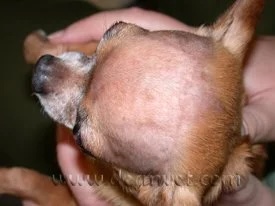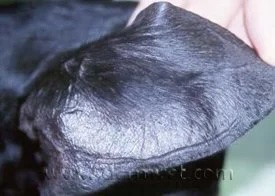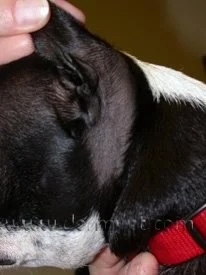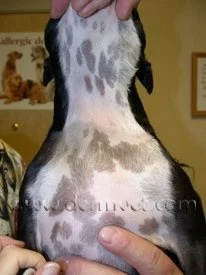
Also Known As: Canine Pinnal Alopecia, Acquired Pattern Alopecia.
Transmission or Cause
A breed-associated genetic disorder of hair follicle miniaturization.
Affected Animals
Often seen in small, thinly-haired dog breeds such as Daschunds, Italian Greyhounds, Whippets, Chihuahuas, Miniature pinschers and Boston terriers.
Clinical Signs
Symptoms usually begin in late puberty or young adulthood. Symmetrical thinning of hair or hair loss commonly occurs on the outer ear flaps, under the neck, on the chest, backs of the thighs, and behind the ears. There is no associated skin inflammation, itch, redness, or rash. In Dachshunds with hair loss on the outer ear flaps, complete hair loss usually occurs by 8-9 years of age and the exposed skin becomes dark/hyperpigmented.
Symptoms
See Clinical Signs.
Diagnosis
Diagnosis is made by consideration of breed and location of hair loss, as well as ruling out other causes of hair loss such as skin infections or hormonal disease. Skin biopsy shows tiny hair follicles with fine hair shafts, but no follicular distortion, inflammation, or other abnormalities.
Prognosis
Although the prognosis for normal hair growth is poor, this is only a cosmetic disorder, which does not interfere with the pet's quality of life.
Treatment
In some cases, partial hairgrowth may occur with oral melatonin supplementation.