Also Known As: Feline Rhinotracheitis Virus
Transmission or Cause
Feline herpesvirus-1 causes an upper respiratory disease and cutaneous/oral ulceration. Transmission is via direct or indirect contact with respiratory/ocular/oral secretions.
Affected Animals
This is a common, worldwide disease of cats with the highest incidence found in shelters, catteries, and board facilities. In adult cats, the disease can be triggered by stress or corticosteroid usage.
Clinical Signs
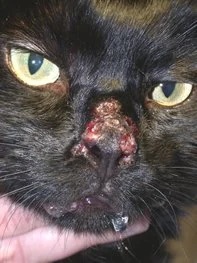
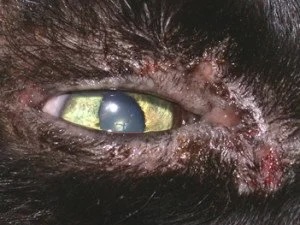
This condition can manifest itself as upper respiratory disease and oral/cutaneous ulceration. Cats can develop sneezing, lethargy, anorexia, fever, conjunctivitis, lymph node enlargement, and serous/mucopurulent nasal and ocular discharge. Ulcerative or interstitial keratitis may be in more severely affected cats. Some cats will develop one or more ulcers orally or along their faces, trunk, distal extremities, and footpads.
Symptoms
See Clinical Signs.
Diagnosis
Herpesvirus can be isolated from oropharyngeal swabs or conjunctival smears. Biopsies of cutaneous ulcers should be performed and will reveal: Epidermal necrosis and ulceration often extending into the dermis, superficial crusting, mixed inflammatory infiltrate often with large numbers of eosinophils, and basophilic intranuclear inclusion bodies may be seen within epidermal cells. Immunohistochemistry of biopsy specimens can aid in identification. Differentials that include respiratory signs include feline calicivirus, Bordetella, Chlamydia, and Mycoplasma. In the absence of respiratory signs, differentials include FeLV dermatitis, drug eruption, erythema multiforme, pemphigus vulgaris, and systemic lupus erythematosus.
Prognosis
The prognosis is typically good. Most cats will recover within 3 weeks. Some cats may remain carriers or be prone to relapses. Feline herpesvirus-1 is contagious to other cats, but not to dogs and humans.
Treatment
Secondary bacterial infections of the respiratory tract/skin/eyes should be treated with systemic or ophthalmic antibiotics. Ulcerative keratitis may require antiviral ophthalmic eyedrops. Other treatments to be considered include: Alpha-interferon, lysine supplementation, imiquimod cream, and famcyclovir can be used for refractory cutaneous ulcers.
Prevention
Vaccination is available and recommended, particularly for cats in high-risk environments such as shelters and catteries.