Also Known As: Mycosis Fungoides, Cutaneous lymphoma
Transmission or Cause
Epitheliotropic lymphoma is a malignant cancer arising from T lymphocytes. There is some evidence that epitheliotropic lymphoma in cats may be linked to FeLV infection.
Affected Animals
Epitheliotropic Lymphoma usually affects older dogs and cats (average age is 9-11 years). There is no sex or breed predilection.
Clinical Signs
In dogs, this disease can present in four main ways:
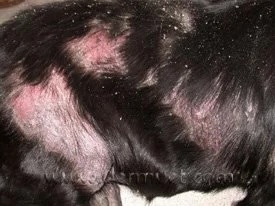
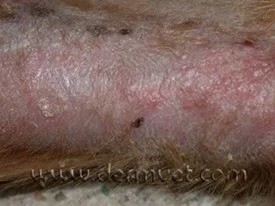
- Generalized red inflamed and scaly skin. The skin may be so flaky that the flakes appear to be shed in sheets.
- Loss of pigment and ulceration/crusting of the nose, lips, and around the eyes — owners may notice a black nose slowly lose pigment to become completely depigmented.
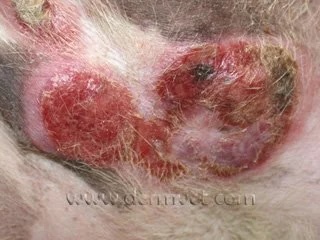
- Single or multiple skin nodules.
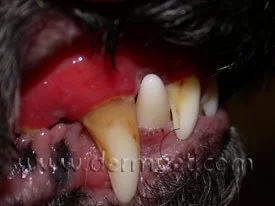
- Thickening and ulceration of oral tissues. Cats may have red nodules or single areas of red raised skin, especially around the head and neck. Many animals will have enlarged lymph nodes and some will be systemically ill.
Symptoms
See Clinical Signs.
Diagnosis
The definitive diagnosis of epitheliotropic lymphoma is made by taking a skin biopsy which involves removing small pieces of skin after numbing the area with anesthetic and submitting the skin samples to a pathologist.
Prognosis
The prognosis for epitheliotropic lymphoma is grave. The average survival time from the time when lesions are first noted to death or euthanasia is about 5-10 months although some dogs may live several years after diagnosis if the disease is slowly progressive.
Treatment
Treatment of epitheliotropic lymphoma involves surgery or radiation therapy if the lesion is single. Multiple or widespread lesions are very difficult to treat but therapy with various chemotherapy drugs may be attempted. Topical chemotherapeutic drugs may also be helpful in single lesions or in dogs with only several lesions.
Prevention
There is no known way to prevent epitheliotropic lymphoma.