Transmission or Cause
The cause is unknown however there is some evidence that the lesions could be due to an underlying hypersensitivity or may be a genetic disease.
Affected Animals
This is a rare disease in dogs. Dogs of any age, breed, or sex can be affected however Siberian huskies and Cavalier King Charles spaniels, dogs under 3 years old, and males seem to have a higher incidence of the disease.
Overview
A rare disease in dogs that usually affects the mouth but can affect the skin.
Clinical Signs
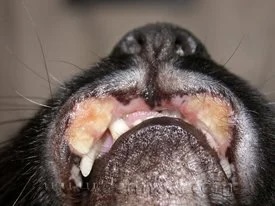
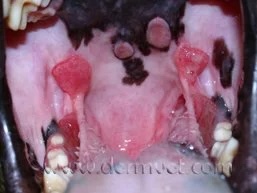
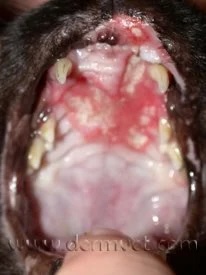
The lesions are usually seen in the mouth but can also occur on the skin. Lesions in the mouth are seen on the palate or on the tongue. On the palate, the lesions can be ulcerated and form slightly raised, red areas and on the tongue are mass-like and can have a greenish color. They less commonly occur on the skin, usually on the belly.
Symptoms
See Clinical Signs.
Description
Rare disease in dogs that usually affects the mouth but can affect the skin.
Diagnosis
The diagnosis is based on clinical signs, biopsy and sometimes culture.
Prognosis
The prognosis is good. Usually, the lesions resolve after treatment however they may recur.
Treatment
Most lesions will respond well to steroids such as prednisone and some may spontaneously regress.